
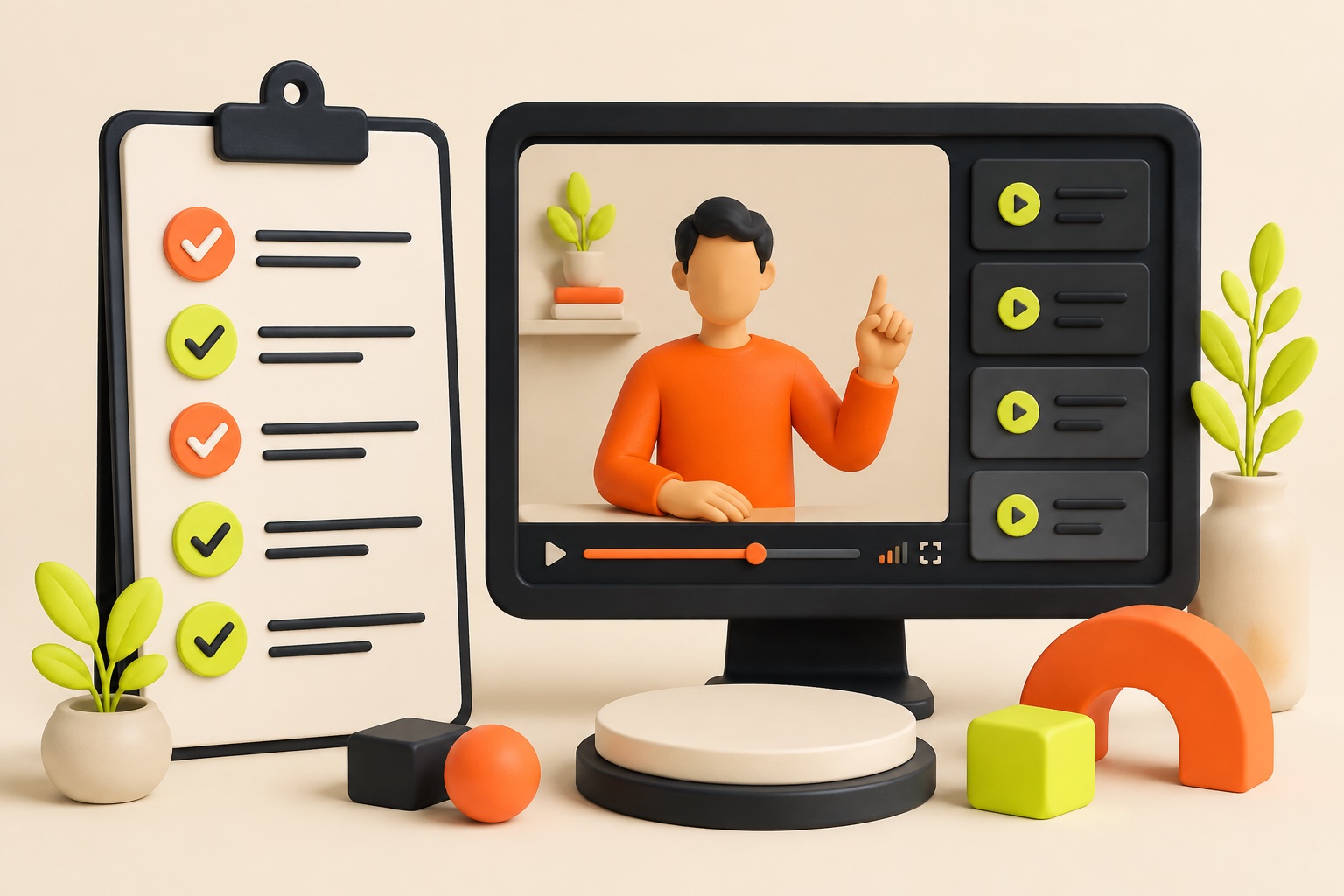
As an organization grows, knowing how work gets done becomes harder to manage. Instructions live in email, documents drift out of date, and experienced employees become the only source of answers. Standard operating procedures—SOPs—give that knowledge a shared home. When clear documentation is paired with well-produced video, teams have practical guidance they can return to when they need it.
Why SOPs matter to an organization.
An SOP describes how to carry out a recurring task. It gives people a shared process, explains responsibilities, and helps them recognize when a situation needs a different response. A useful procedure includes the purpose, prerequisites, steps, expected outcome, and who to contact when something goes wrong.
For mid-size and large organizations, that consistency matters across departments, locations, and changing teams. SOPs can support onboarding and handovers while reducing dependence on individual memory. Their value depends on whether they accurately reflect the work and are maintained as processes change.
Put procedures and documents in one place.
A central knowledge library gives employees a reliable starting point for approved procedures, reference documents, templates, and training materials. Instead of searching through old messages or asking which attachment is current, they can return to a shared source.
Organize the library around the tasks people perform. Use clear titles, searchable categories, and links between related procedures. Keep draft material separate from published guidance, show the owner and review date, and archive superseded versions so people can tell which instructions to follow. Access should reflect each team’s responsibilities.
Make instructions practical and easy to follow.
Write for the person doing the task. Explain the starting conditions, describe one action at a time, and show what a successful result looks like. Include common exceptions and a clear escalation path instead of assuming every situation follows the ideal sequence.
Test a draft with someone who did not write it. Ask them to complete the task and note where they hesitate or need extra context. Those observations help turn a document that sounds complete into instructions that work in practice. The people responsible for the process should review and approve the final guidance.
Show the process with professional video.
Video can make a procedure easier to understand when people benefit from seeing an action, a screen, or a sequence demonstrated. A focused walkthrough can explain a software workflow, illustrate a service process, or introduce a new employee to an internal system.
Good training video needs more than a recording. A clear script, readable visuals, thoughtful pacing, clean audio, and purposeful editing help viewers follow the lesson. Captions and a transcript make the material easier to access and reference. Pair each video with its written SOP so detailed steps and updates remain easy to find.
How PartnerPeople can help your team.
PartnerPeople can help mid-size and large organizations create compelling video materials that are professional, well-polished, and designed around real learning needs. We bring communication design, video production, and technology together to make complex processes easier to explain.
We can help shape the story, organize the instructional content, and produce clear demonstrations and supporting visuals. Working with your subject-matter experts keeps the content grounded in your actual procedures. We can also help plan a central digital home that connects videos with the documents and resources employees need.
Treat the library as a living resource.
Assign an owner to each SOP and training video. When a process changes, review both formats together so they remain aligned. Short videos organized around individual tasks can make updates more manageable than a single long recording covering an entire department.
Begin with a process that generates repeated questions or frequent handoffs. Publish the approved materials, introduce them to the team, and gather feedback. Look at practical signals such as how easily employees find guidance, where they still need help, and whether the instructions lead to the expected outcome. Use those findings to improve the next set of materials.
A central home for SOPs, documents, and training videos helps knowledge stay accessible as your organization grows. Clear ownership and regular updates keep it useful; thoughtful writing and polished video make it easier for people to put that knowledge to work.
Where to start
- Choose a recurring process that needs clearer guidance.
- Confirm the steps with the people responsible for the work.
- Create a concise written SOP and a focused video where useful.
- Publish approved materials together in a searchable library.
- Assign owners, review dates, and a process for updates.